
Resilient Autonomy Initiative
Steering the Infrastructure Shift to Intelligent Systems
We are living through a structural shift in digital infrastructure.
For decades, institutions governed software on the assumption that execution was deterministic. Systems followed rules. Outputs were traceable. Failures could be isolated and corrected at known control points.
That operating model is changing.
Modern AI systems interpret goals, navigate ambiguity, and increasingly act across systems, roles, and time. Authority is moving from static code to adaptive judgment layers. As autonomy expands, traditional security and governance assumptions no longer hold.
The Resilient Autonomy Initiative exists to ensure that as systems gain autonomy, institutions retain clarity, accountability, and control.

Why Resilience Matters
Autonomy without accountability concentrates risk.
Autonomy without adaptive security amplifies fragility.
Autonomy without intentional governance erodes trust.
Resilience in this context does not mean eliminating risk. It means designing systems, incentives, and institutions that can absorb uncertainty, detect failure early, and respond before harm becomes systemic.
The question is not whether autonomous systems will proliferate.
The question is whether governance will evolve alongside them.
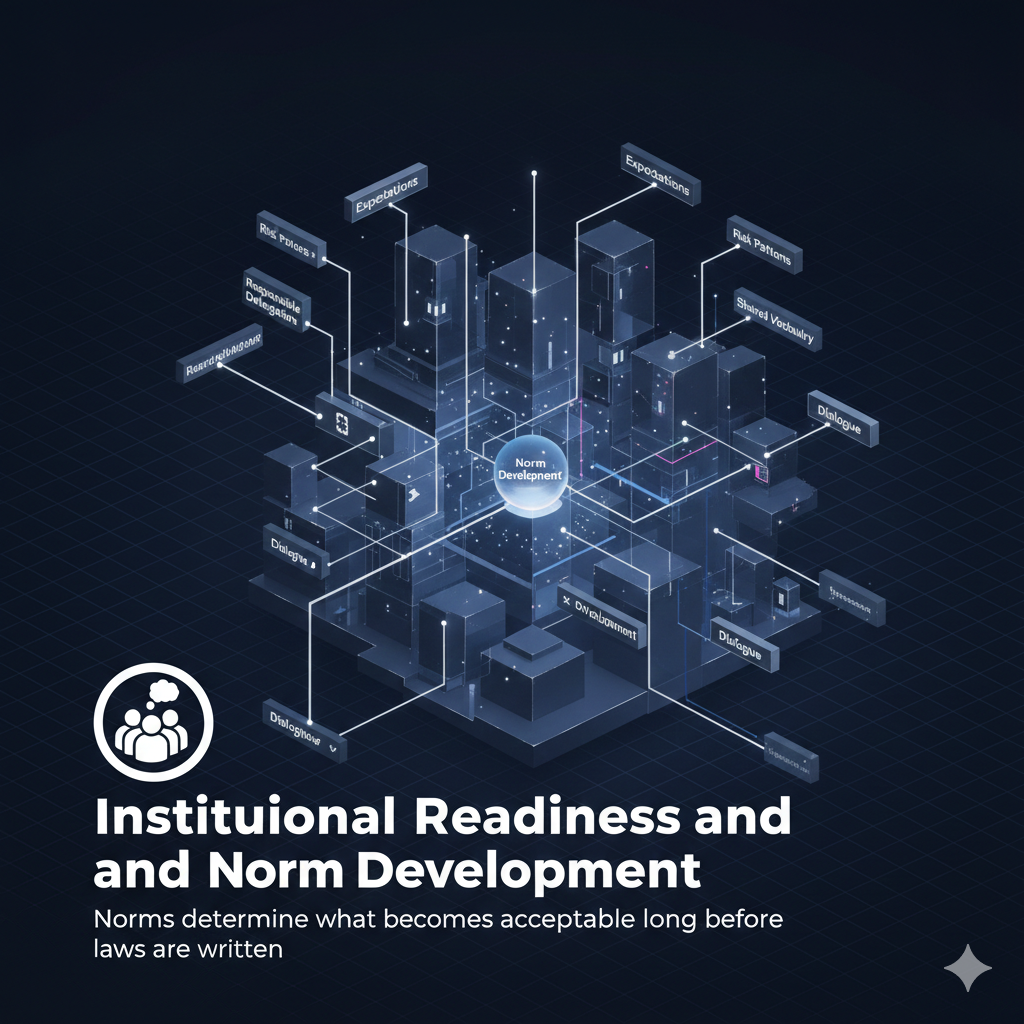
Strategic Domains



Our Commitment
The Resilient Autonomy Initiative is grounded in a simple premise:
As authority migrates from humans to systems, responsibility must not disappear into abstraction.
We approach this work with rigor and restraint. No single framework can eliminate risk. No isolated intervention can steer an infrastructure transition.
But it is possible to design for resilience.
It is possible to preserve accountability.
It is possible to ensure that autonomy strengthens shared prosperity rather than undermines it.
The evolution toward intelligent, acting systems is already underway.
Our focus is ensuring that governance evolves with it.